2025–2026 Evidence of Impact: Growth in Grade 8 Literacy Skills (Evidence Post – April)
As part of our Grade 8 literacy inquiry, we used multiple sources of evidence to examine whether our instructional actions were making a difference for students—particularly those who initially demonstrated emerging literacy skills. Our primary source of evidence came from two common Grade 8 literacy assessments:
“Let’s Help Grow More Intergenerational Connections” and “Measles in Canada”
Both assessments measured student performance across shared literacy competencies, including:
- Making predictions
- Decoding
- Identifying main ideas and supporting details
- Making connections
- Responding to text, including inferencing and use of evidence
After the first assessment, students who received Emerging, Emerging/Developing, or Developing were identified. Their work was then intentionally re-examined during the second assessment to determine growth over time.
What the Data Shows
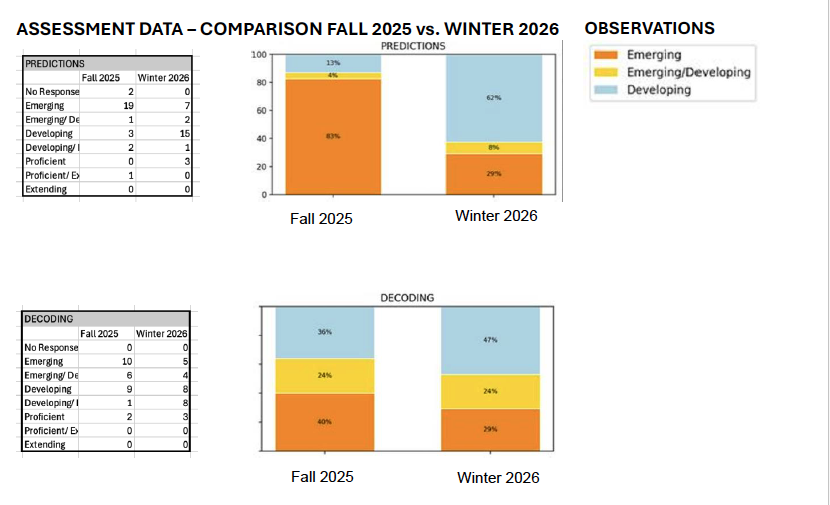
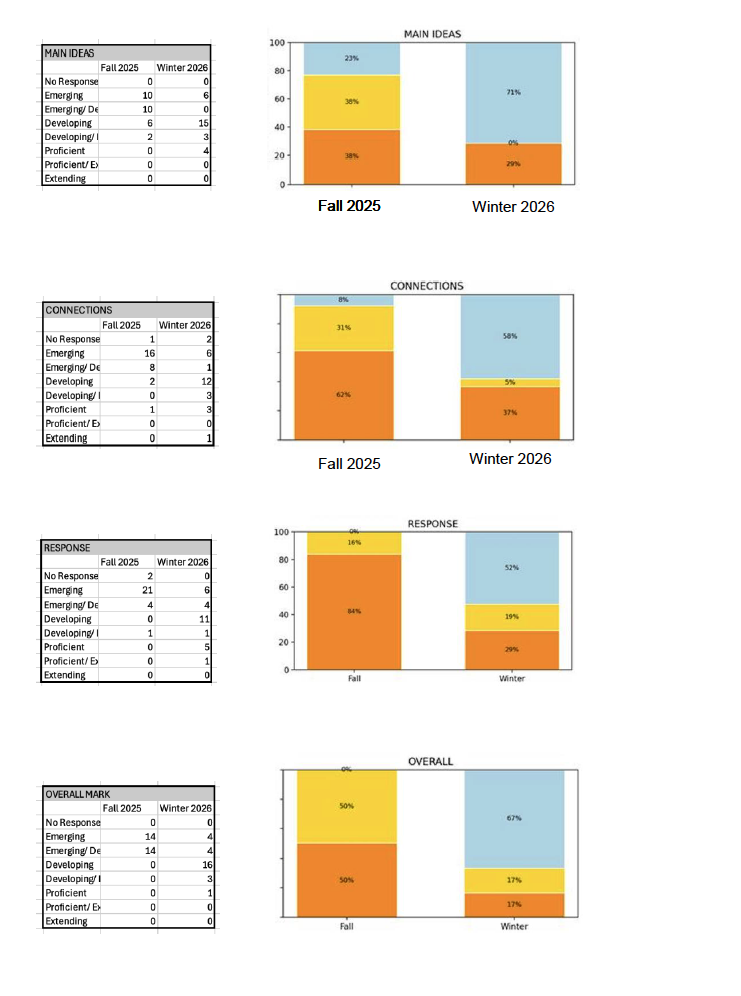
Analysis of the assessment data shows clear and encouraging growth in a wide variety of areas. Here are some of the highlights:
- Overall growth was observed across the cohort, particularly among students initially identified as Emerging or Emerging/Developing.
- There was a significant shift from Emerging / Emerging–Developing to Developing across multiple literacy skills.
- Of the 28 students who initially fell within the Emerging or Emerging/Developing categories, only 8 students remain in those categories after the second assessment.
- The strongest growth was observed in students’ ability to follow instructions, provide more complete responses, and make clearer connections to the text.
- A small number of students continue to sit in the Emerging range across most skills, indicating a need for ongoing, targeted support.
Connecting Evidence to Practice
These results closely reflect the work the Grade 8 team focused on between December and March. During this time, teachers made a conscious effort to align expectations and routines across subject areas, particularly around following instructions. There was also a stronger emphasis on vocabulary development and the use of sentence scaffolds, which helped students communicate their thinking more clearly. In addition, structured supports—such as lined response spaces, graphic organizers, and highlighting strategies—were used to help students better identify key ideas and supporting details. Consistent organizational routines also played a role in improving students’ readiness to engage with literacy tasks. Teachers have noted that, compared to the fall, students are now more willing to attempt written responses, even when they are unsure, and are doing a better job of referring to the text for evidence.
What We Are Learning
This evidence suggests that small, consistent instructional shifts—when implemented across classes—can lead to meaningful improvements in student literacy. At the same time, the data highlights that some learners require more intensive and individualized supports, particularly in decoding and comprehension.
Next Steps
Moving forward, we will:
- Continue refining shared literacy strategies, with particular attention to vocabulary and decoding
- Use assessment data to identify students who require targeted interventions
- Monitor whether gains are sustained as texts and tasks increase in complexity
Through ongoing reflection and evidence-informed action, we remain focused on strengthening literacy foundations so that all Grade 8 students can access learning with greater confidence and independence.