2026-2027: Learning From The Evidence: Our First Step
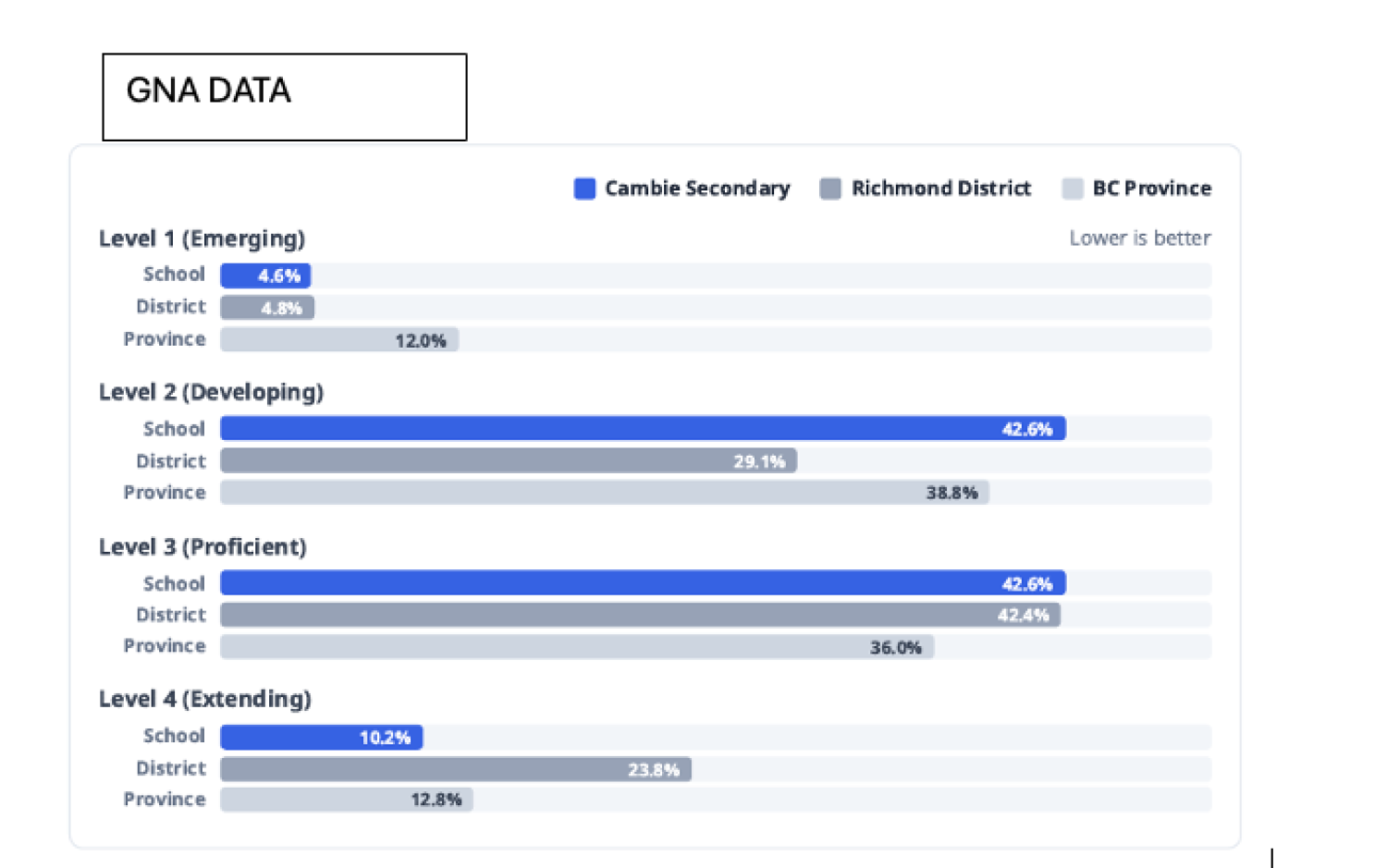
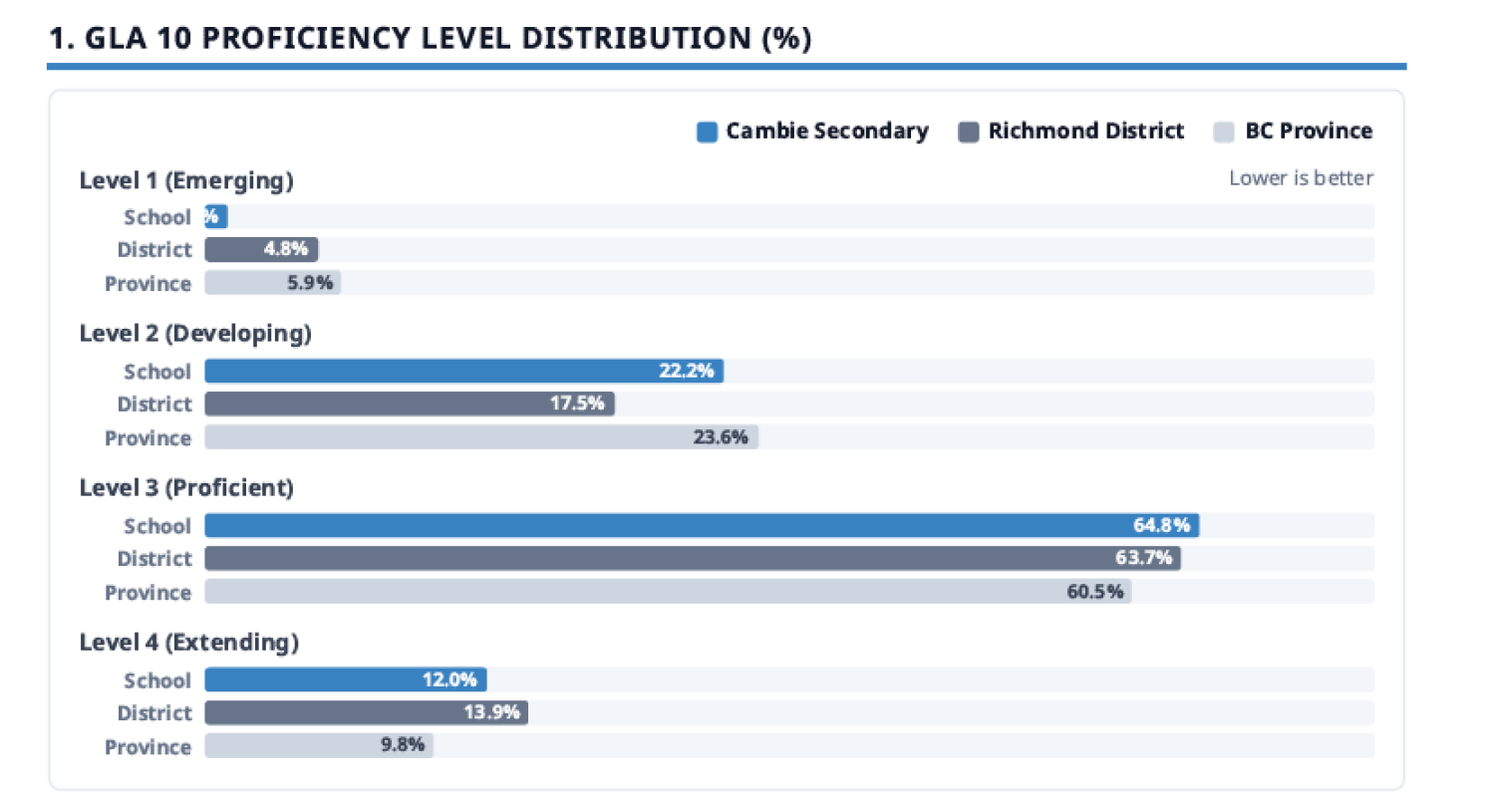
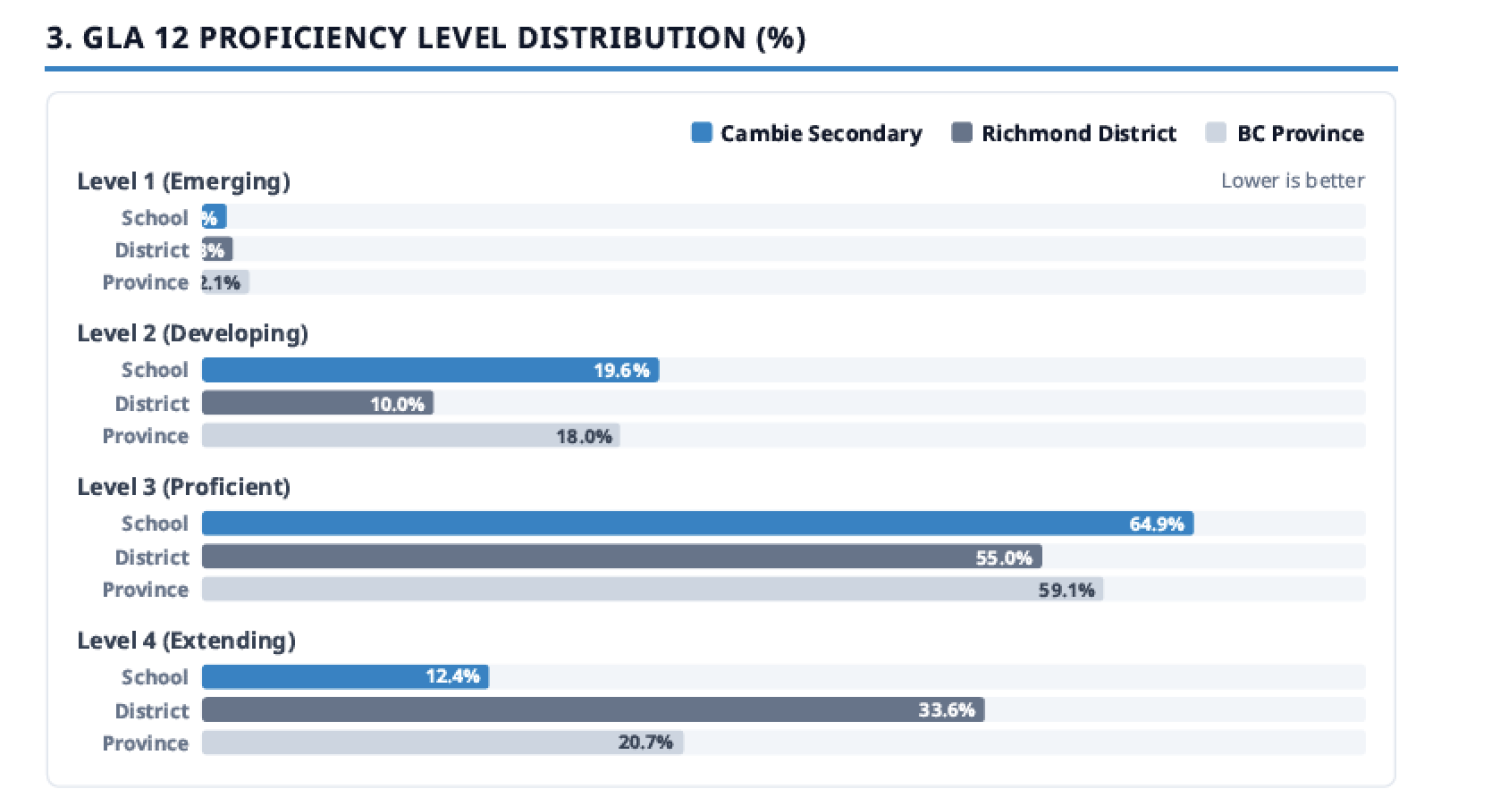
| An action that we have taken to support our school’s learning focus is: | An action that we have taken to support our school’s learning focus is: At H.J. Cambie Secondary, we have begun a collaborative inquiry into how we can strengthen students’ literacy and numeracy, with particular attention to helping more learners demonstrate extending levels of understanding. We first shared our Graduation Numeracy Assessment (GNA) and Graduation Literacy Assessment (GLA) results at an Education Faculty meeting, followed by a broader staff meeting in early October. During the staff meeting, teachers worked in departmental groups to examine school and department data alongside the GNA and GLA results. Staff explored what they noticed, what they wondered, and what questions the evidence raised about student learning. Our results provide strengths to build upon. In the assessment sessions reviewed, approximately 77% of students achieved Proficient or Extending in both GLA 10 and GLA 12. GLA 10 students demonstrated strengths in communication and strategic thinking relative to provincial benchmarks. In GNA 10, 52.8% achieved Proficient or Extending, above the provincial average of 48.7%, and students demonstrated strength in interpreting information. The results also identify opportunities for growth. In GNA 10, 10.2% of students achieved Extending, compared with 23.8% district-wide—a gap of 13.6 percentage points. Applying strategies and carrying out solutions are additional areas for exploration. In GLA 12, the Extending gap is also significant, with opportunities to strengthen comprehension and the development of meaningful personal connections. These findings are starting points for inquiry. We want our next steps to emerge from staff observations, professional expertise, and evidence of learners’ needs. |
| This action supports our school’s learning focus in the following ways: | Who? School administrators and teaching staff are working together, with departmental groups bringing perspectives from across subject areas. This establishes literacy and numeracy as a shared responsibility. • Doing what? Adults are examining assessment results alongside school and department evidence, identifying strengths and areas for growth, and developing questions about how classroom learning experiences might support deeper understanding. We are considering how to help learners move from Developing to Proficient and from Proficient to Extending. • How often? This initial work has occurred through an Education Faculty meeting and a subsequent whole-staff meeting with departmental discussion. These conversations establish the foundation for continued inquiry and reflection across our three action posts this year. • Producing what evidence? At this stage, the evidence includes the assessment results examined and the notices, wonders, and questions raised through departmental discussions. Our next step is to capture these themes and identify classroom evidence, including student work and learner perspectives, that can help us test our emerging assumptions and assess the impact of future actions. This work begins the scanning and focusing stages of our Spiral of Inquiry and supports our Framework for Enhancing Student Learning focus. By starting with shared evidence and staff dialogue, we are building a staff-driven process for selecting, trying, and reviewing actions that make a difference for learners. |
| Photos | Image
Image
Image
|